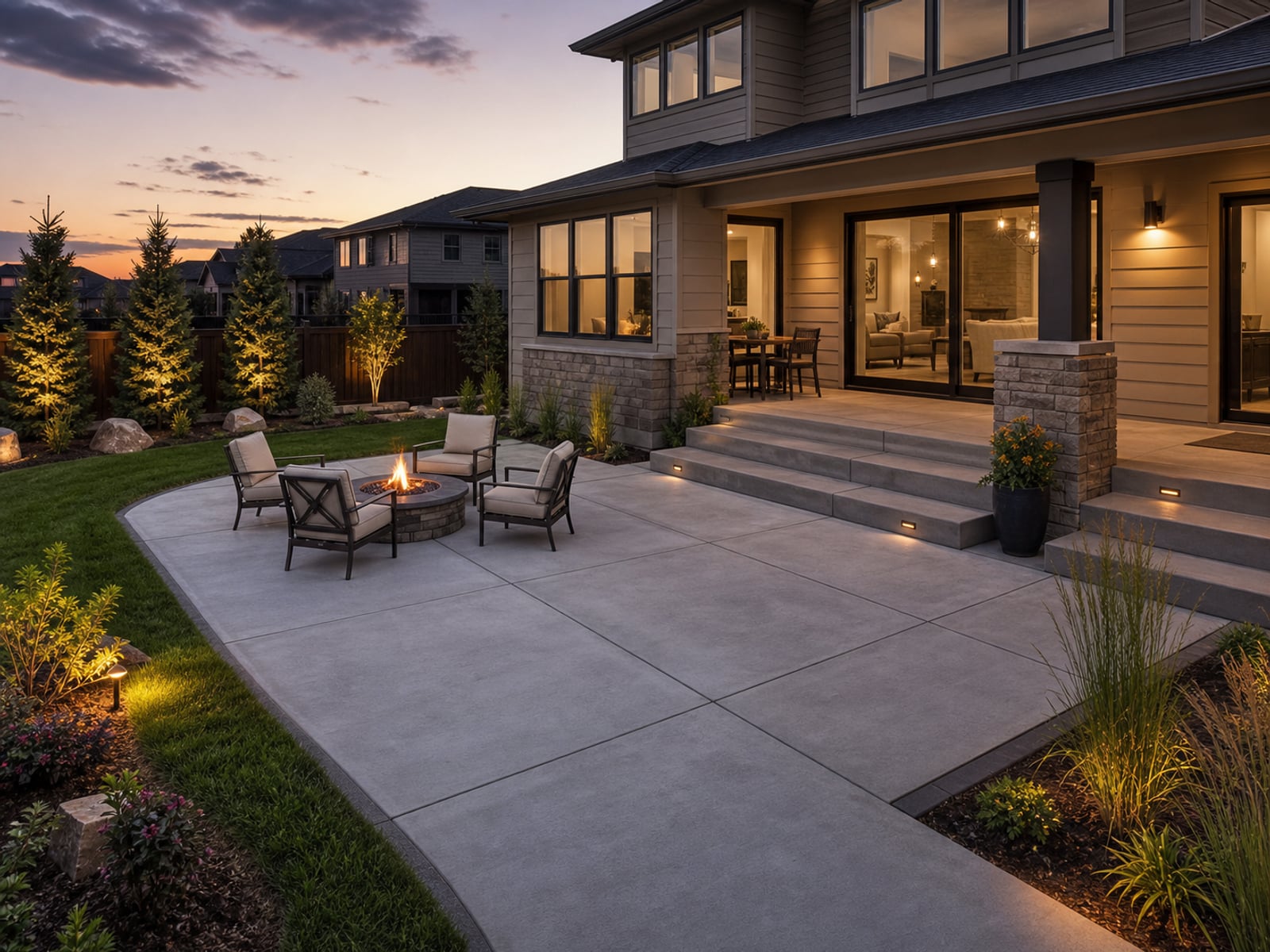
Layout fit to the yard
Sized and shaped for grills, seating, and entertaining, not a default rectangle.
[Your Service Area] [Your City]
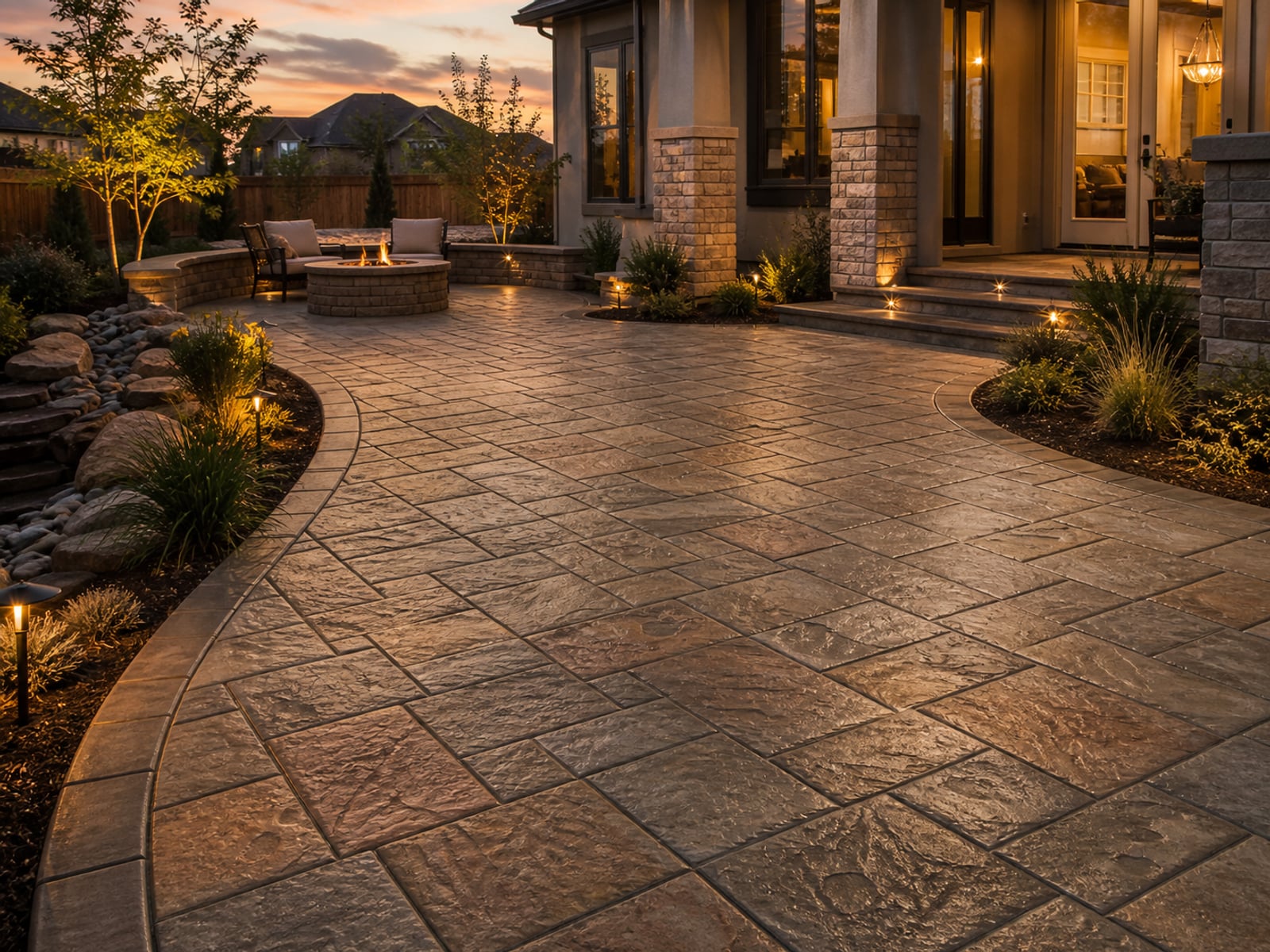
Backyard patios designed for grilling, seating, fire pits, and outdoor living: sized and shaped before the first form is set.
A bare backyard or worn-out patio makes outdoor living feel unfinished. Most homeowners avoid using the space, or rebuild it twice because the first design didn't match how they actually live in the yard.
[Your Concrete Company] plans the patio around how the family uses the space: grill area, seating zone, dining transition, and where fire features or steps belong. The pour then matches the design, not the other way around.
Start a patio estimateA patio is planned around people and weather. These are the constants underneath every layout.
Full structural depth over compacted base, even under decorative finishes.
The surface pitches gently away from the house so water never sits where people do.
Graded and compacted so the patio cannot settle into the backfill near the house.
Walk on it within a day or two; furniture and heavy use follow the written cure schedule.
The parts of the scope that do not depend on which finish you choose.
Sized and shaped for grills, seating, and entertaining, not a default rectangle.
Steps, edges, and grass lines planned so the patio looks intentional.
Smooth, broomed, stamped, exposed: the finish supports the look.
Conduit, drainage, and structural notes set up the next phase.
Steps, seat wall, and the main slab form up together so the finished patio reads as one piece, not phases that happened to touch.
![Concrete patio extension with integral steps and a curved seat wall taking shape behind a [Your City] home](/assets/frames/frame_0110.webp)
![Bare graded backyard behind a [Your City] home before patio layout begins](/assets/frames/frame_0001.webp)
Grill, table, fire, and the paths between them get drawn before anyone touches dirt. [Your Concrete Company] plans the zones around how the family actually uses the yard, then pours the shape that serves them.
Size, access, ground, and finish set the range. Each one is a decision you make on paper, not a surprise on pour day.
Square footage drives volume; curves, radius edges, and multiple zones add forming time.
Gate width, slope, and distance from the truck decide whether concrete is wheeled, pumped, or chuted.
Soft soil, regrading, or drainage correction under the new slab adds prep before the pour.
Broom is the baseline; smooth trowel, exposed aggregate, color, or stamping each add steps.
Dollar figures come from the walkthrough, in writing. These are the levers that set them.
The layout you sign off on is the layout that gets formed.
Layout, finish, and timing questions worth settling before the design conversation starts.
Yes. The planned use of the space shapes the size, edges, and finish direction. Most patios benefit from being designed around real seating, grilling, and traffic flow rather than a generic rectangle.
No. A clean standard finish can look strong when the layout, edges, and surrounding yard transitions are handled well. Decorative finishes are an option, not a requirement for a quality result.
Concrete reaches usable strength within a few days, but full cure takes longer. We give a specific timeline for foot traffic, furniture, and heavy use on the project handoff.
Most patios run a few working days: base prep and forming, the pour itself, then finishing, joint cuts, and cleanup. Weather windows can shift the dates; the sequence never changes, and you get the schedule in writing before work starts.
Size and shape, backyard access, the condition of the ground underneath, and the finish level. Each shows up as its own line item in the written scope, so you can dial the project up or down with real information.
Describe the yard, how you want to use it, and a rough size. The layout conversation starts from there, on paper first.
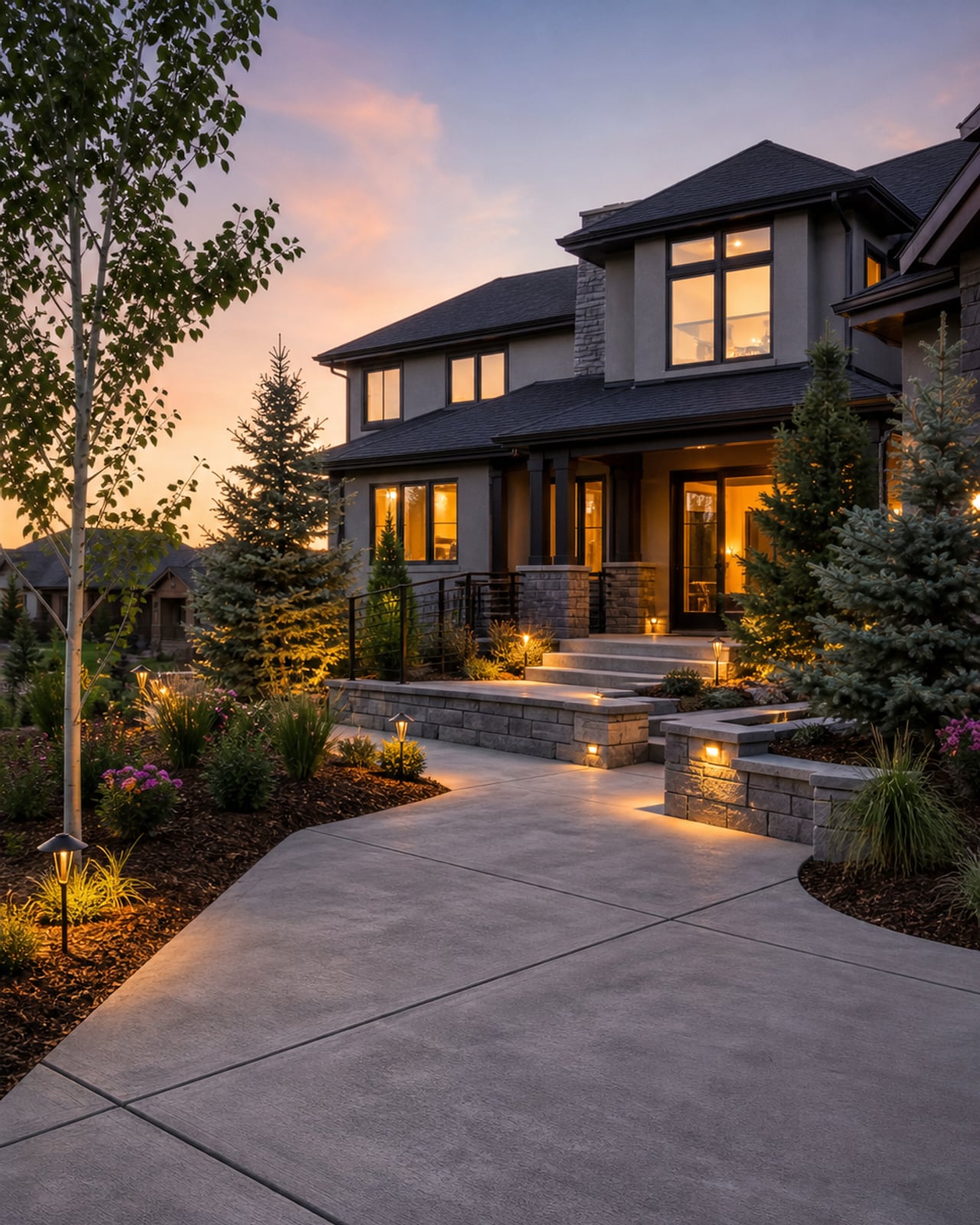
![Long residential concrete driveway leading to a modern two-story home in [Your City] at dusk](/assets/services/driveway-installation.jpg)