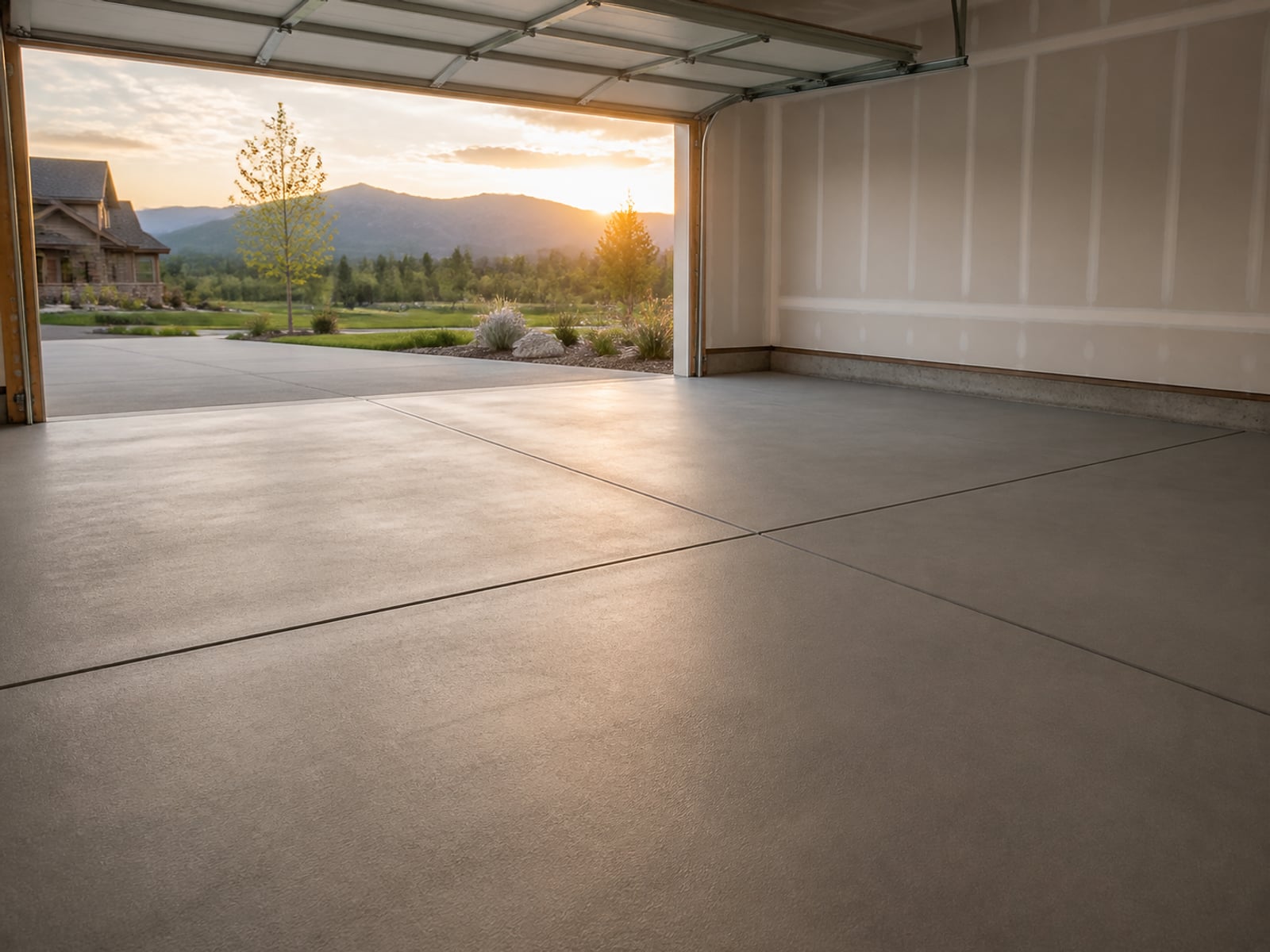
Use-case sizing
Pour spec matched to vehicles, equipment, or addition loads.
[Your Service Area] [Your City]
Flat, durable slabs for garages, shops, additions, and utility spaces: sized for use, not for the bare minimum spec.
A slab that is too thin, uneven, or poorly planned turns a garage, shop, or addition into a long-term headache. Most slab failures trace back to base prep or thickness, not the concrete itself.
[Your Concrete Company] scopes the slab around the actual use: vehicles, lifts, tools, addition loads, or workshop layout. Thickness, reinforcement, and finish all match the use case before pour day.
Start a slab estimateGarage and shop slabs are structural elements. The spec reads like one.
Sized to the load: daily drivers, lifts, racks, or an addition above.
Air-entrained mix specified for freeze-thaw climates.
Sheeting under the slab keeps ground moisture out of the finished space.
Drivable in about a week; the mix reaches its rated strength near day 28.
The non-negotiables underneath garages, shops, and additions.
Pour spec matched to vehicles, equipment, or addition loads.
Sub-grade compaction, vapor handling, and reinforcement planned in.
Straight forms, square corners, and edges that line up with the structure.
Smooth-troweled or broomed finish, chosen for how the space gets used.
Before pour day, every line below is already decided and priced.
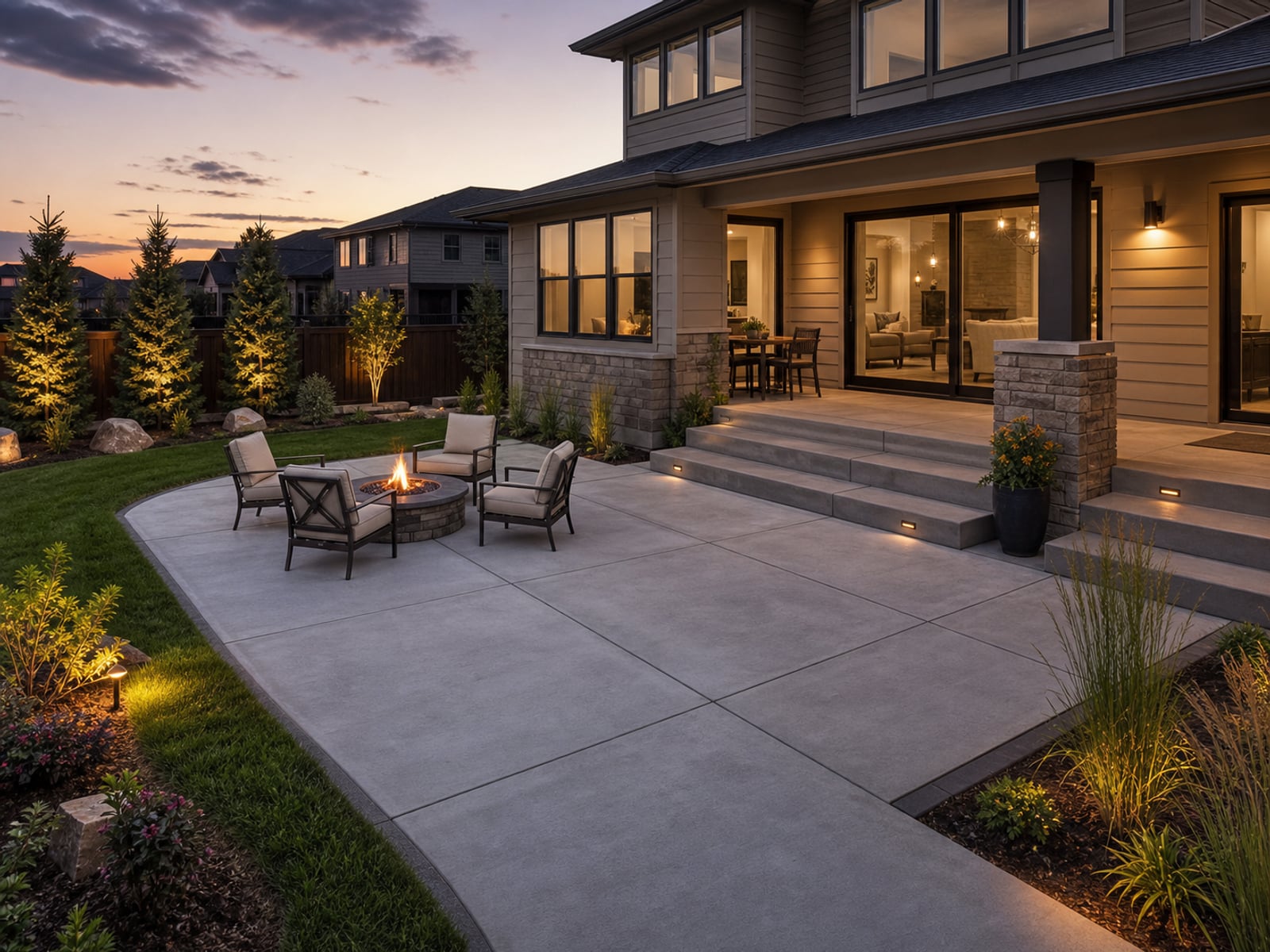
![Flat broom-finished concrete slab at the back of a [Your City] home at dusk](/assets/frames/frame_0060.webp)
Cabinets, lifts, and toolboxes all assume the floor is true. [Your Concrete Company] screeds to the structure, checks the plane before finishing, and cuts joints where the slab math wants them, not where they are convenient.
A slab estimate is mostly decided below the surface. These are the inputs that move it.
Square footage times depth is the concrete itself; heavier use means a thicker section.
Dig-out depth, imported base, and compaction passes scale with the existing ground.
Rebar or fiber, barrier grade, and edge details follow the load the slab must carry.
Smooth trowel for shops, broom for traction, plus the saw-cut joint plan.
Dollar figures come from the walkthrough, in writing. These are the levers that set them.
A slab is the one trade everything else stands on.
Loads, timing, and builder coordination: what slab projects come down to.
Yes. Garage and shop slabs usually need more attention to load, thickness, access, and the surrounding structure. The spec is closer to a structural element than an outdoor living surface.
Yes, but final dimensions and use details lock in the quote. We can start the conversation early and refine the estimate as the plans firm up.
When the slab supports a structure, the install is sequenced with the builder so the foundation is ready when framing arrives. We bring our plan to that conversation, not the other way around.
Light foot traffic is fine within a day or two. Vehicles typically wait about a week, and the mix keeps gaining strength toward its design rating near day 28. The handoff sheet gives you the exact dates for your pour.
Footprint and thickness, how much excavation and imported base the ground needs, the reinforcement and vapor spec, and the finish. Each is a separate line in the written scope, so a thicker or better-reinforced slab is a visible choice, not a surprise.
Share the footprint, what the space will hold, and any build plans above it. The spec conversation starts before the price does.
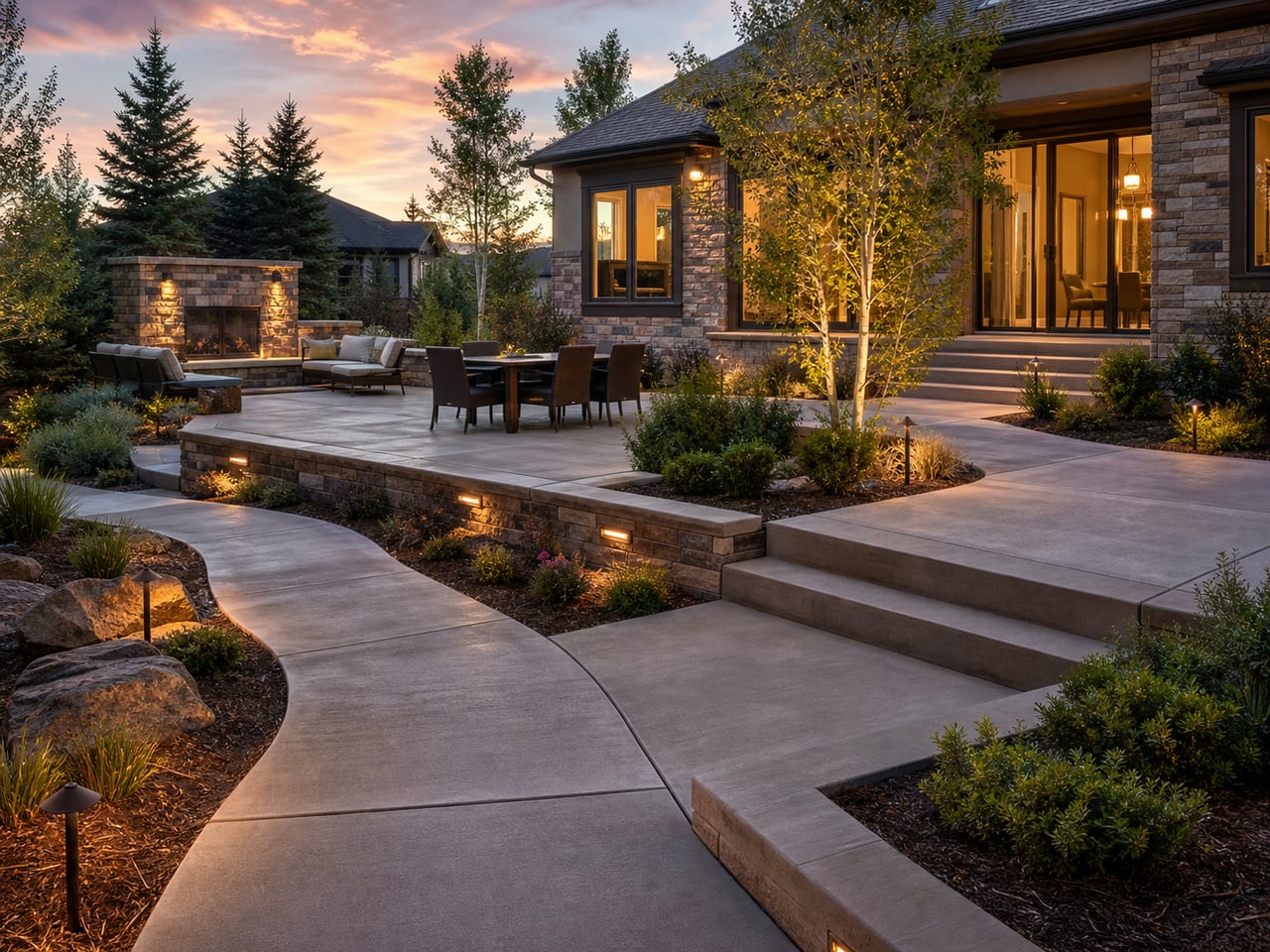
![Long residential concrete driveway leading to a modern two-story home in [Your City] at dusk](/assets/services/driveway-installation.jpg)