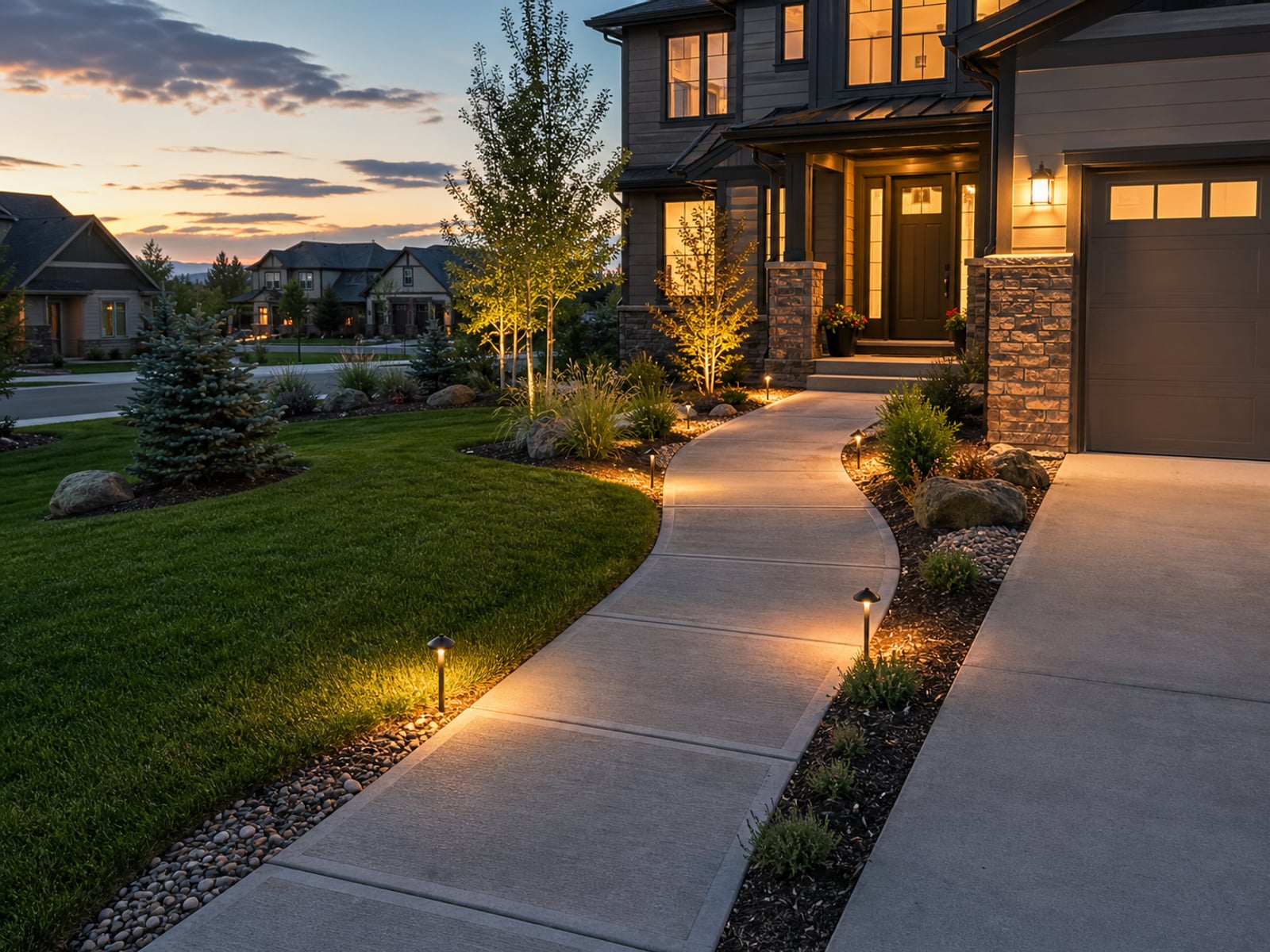
Clear front-to-back flow
Paths sized for two people walking side by side, not a single-file route.
[Your Service Area] [Your City]
Level, practical paths that connect driveway, front door, side yards, and outdoor spaces, without the muddy in-between.
Uneven paths, muddy side yards, and disconnected entry points make a home harder to use and less welcoming. Most walkway problems come from a missing layout, not a missing slab.
[Your Concrete Company] treats the walkway as the route a homeowner and their guests actually walk. We plan width, surface, and transition so the path looks designed instead of poured wherever it fit.
Start a walkway estimateWidth, depth, slope, and joints: small surfaces still carry a full spec.
Wide enough for two people to walk side by side to the door.
Full walking-surface depth over compacted base, never a thin topping.
Joints spaced close to the walk width, so panels stay square and cracks follow the lines.
A gentle cross fall sheds water without the path ever feeling tilted underfoot.
What every walkway scope carries, whatever the length of the run.
Paths sized for two people walking side by side, not a single-file route.
Mud, grass burn, and worn tracks replaced with a real surface.
Where the walkway meets the driveway, patio, or porch is handled cleanly.
Standard, broomed, or decorative finishes matched to the property.
Width, line, steps, and transitions are settled on paper before the first form stake goes in.
If the route needs a step, a curve, or a wider landing, it is drawn before it is formed.
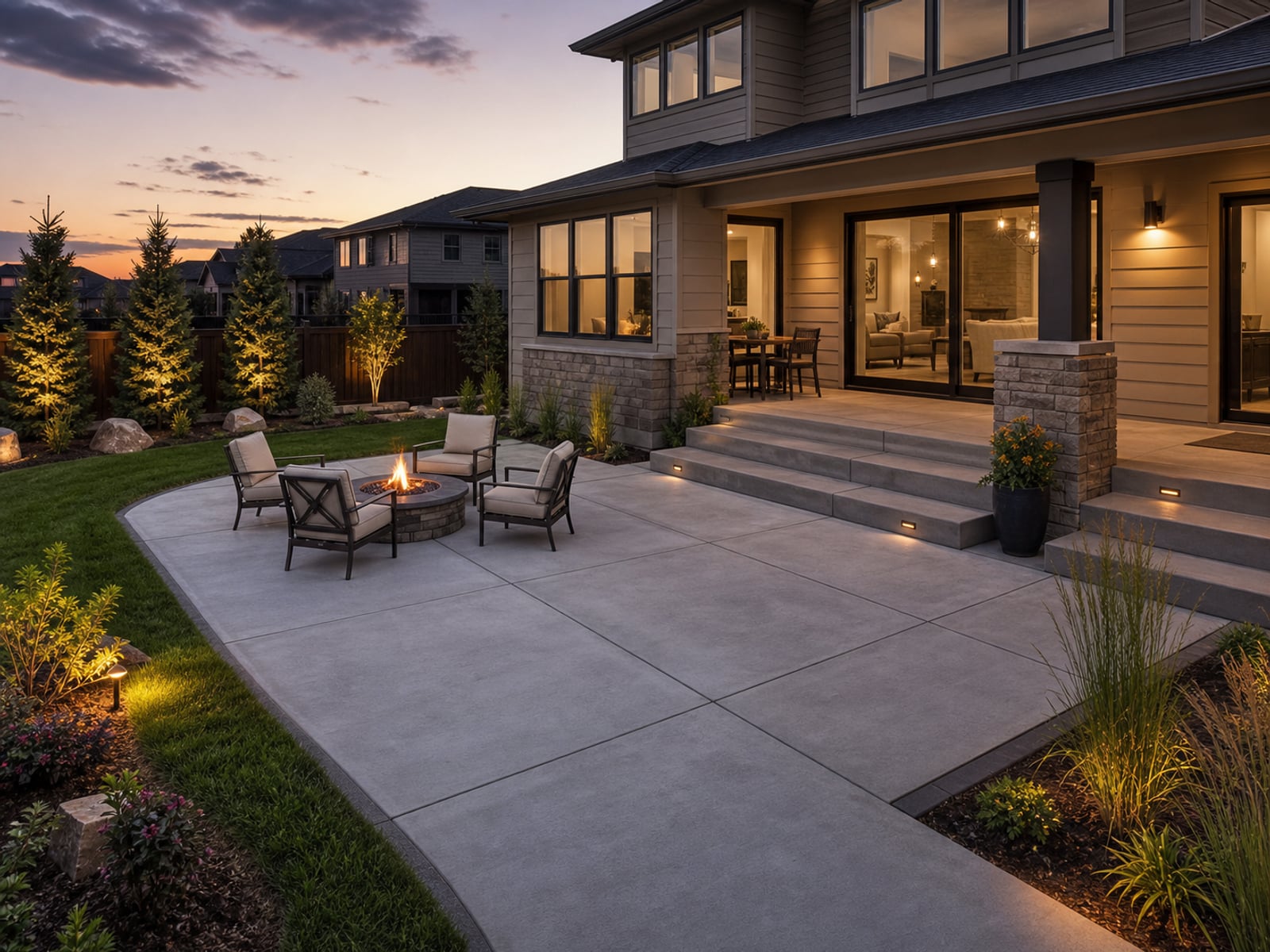
![Finished concrete patio, steps, and connected walking surfaces behind a [Your City] home at dusk](/assets/frames/frame_0169.webp)
Where people actually walk, where the downspouts discharge, and where the snow gets shoveled all shape the line. [Your Concrete Company] draws the route around the way the property gets used, then forms exactly that line.
Paths price by the route, not just the square footage. These are the inputs that set the number.
Total square footage is the base of the number; wider two-person walks cost more than service paths.
Demo and haul-off of existing concrete, pavers, or flagstone adds a prep day.
Slopes that need steps, landings, or retaining edges add forming and finish work.
Broom finish is the baseline; matching or complementing existing concrete takes planning and color work.
Dollar figures come from the walkthrough, in writing. These are the levers that set them.
Every transition lands flush: driveway, porch, patio, door.
Mud, matching, widths, and timing: the practical questions paths actually raise.
Often, yes. The project still needs proper drainage planning, but a planned walkway gives the area a real daily-use surface instead of a worn dirt path.
The estimate reviews color, age, finish, and placement. Exact matches are not always realistic on older concrete, but transitions can be planned so the new work reads as intentional.
Most front walks look right at 3.5–4.5 feet so two people can walk together comfortably. Side-yard runs and service paths can be narrower. We recommend a width during the walkthrough.
Foot traffic is typically fine within a day or two. Concrete keeps curing for weeks after that, and the handoff sheet spells out when the surface is ready for heavier use like equipment or planters.
Length and width, removal of the old path, grade changes that need steps or landings, and the finish. The written scope lists each one, so you can see exactly where the number comes from.
Tell us where the path needs to go and what it replaces. You get a drawn route and a written number before anything is dug.
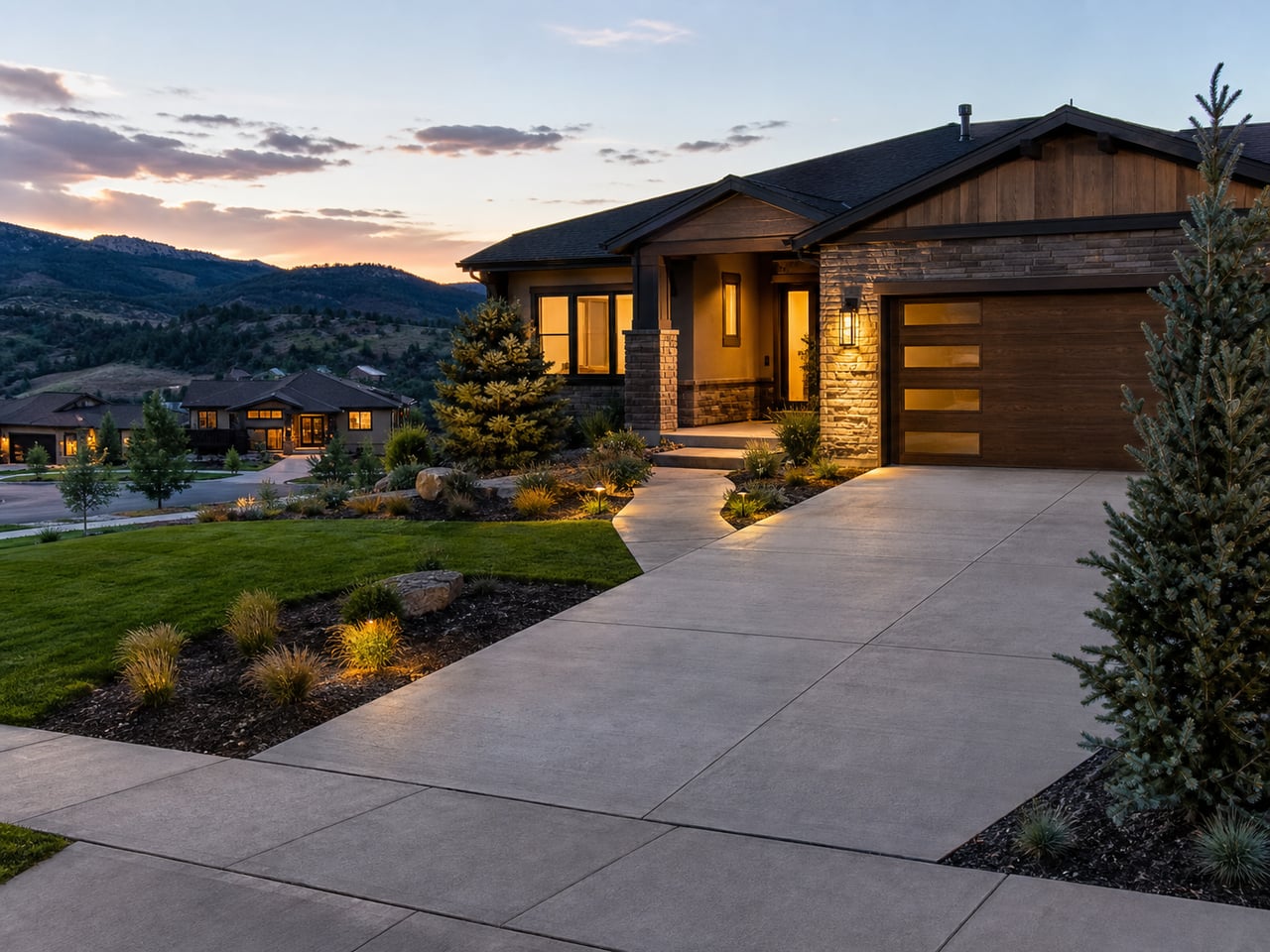
![Long residential concrete driveway leading to a modern two-story home in [Your City] at dusk](/assets/services/driveway-installation.jpg)