Daily-use thickness
Pours sized for cars, trucks, and trailers, not the cheapest spec.
[Your Service Area] [Your City]
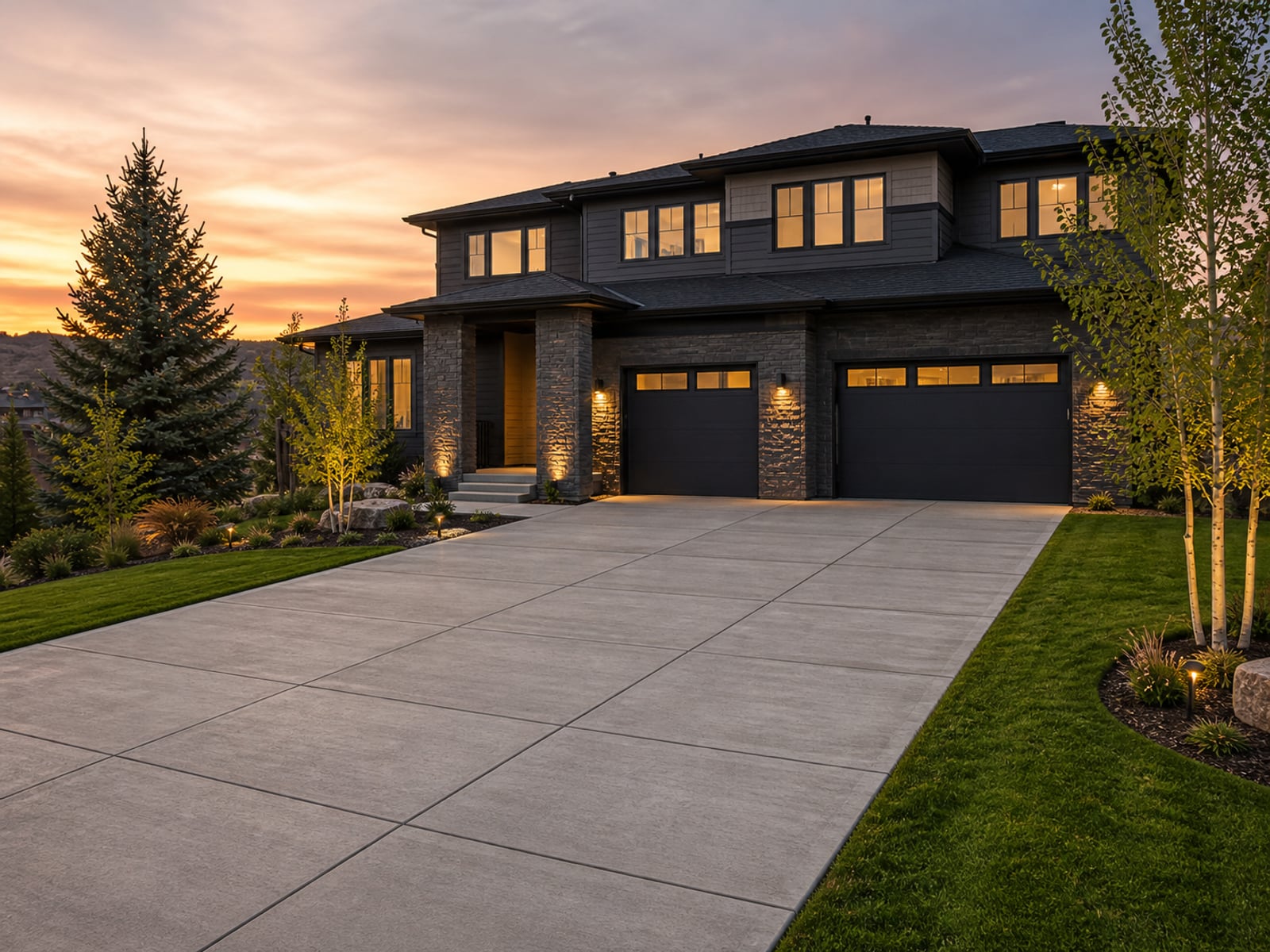
Durable concrete driveways with clean edges, planned drainage, and finish work that reads clean from the street on day one.
A driveway is usually the first concrete surface a homeowner notices. Cracks, low spots, rough edges, and poor drainage make the whole property feel neglected, and they signal future repair bills.
[Your Concrete Company] plans the driveway around access, slope, control joints, and a clean approach from street to garage. The estimate spells out base prep, thickness, joints, and finish so nothing on pour day is improvised.
Start a driveway estimateThickness, base, joints, cure: the four specs that decide whether a driveway stays flat. This is the standard, in numbers.
Residential driveways pour at 4-5 inches; heavier vehicles shift the spec at the walkthrough.
The sub-base is graded and compacted before a single form is set.
Control joints placed by design, so cracking follows the lines you approved.
Foot traffic within days; parking typically waits about a week. The exact schedule comes in writing.
Four commitments that ride along with the square footage, on every replacement and every new pour.
Pours sized for cars, trucks, and trailers, not the cheapest spec.
Control joints placed by design, not added after the fact.
Slope and elevations planned so water leaves the driveway, not the garage.
Clean edges and finish work that match the home, not a parking lot.
Every replacement runs the same order. Day counts flex with size and weather; the order never does.
The old slab comes out and the site is protected.
Grade, compact, form, and set reinforcement.
Poured, screeded, broom finished, and jointed.
Walk on it in days; park on it about a week in.
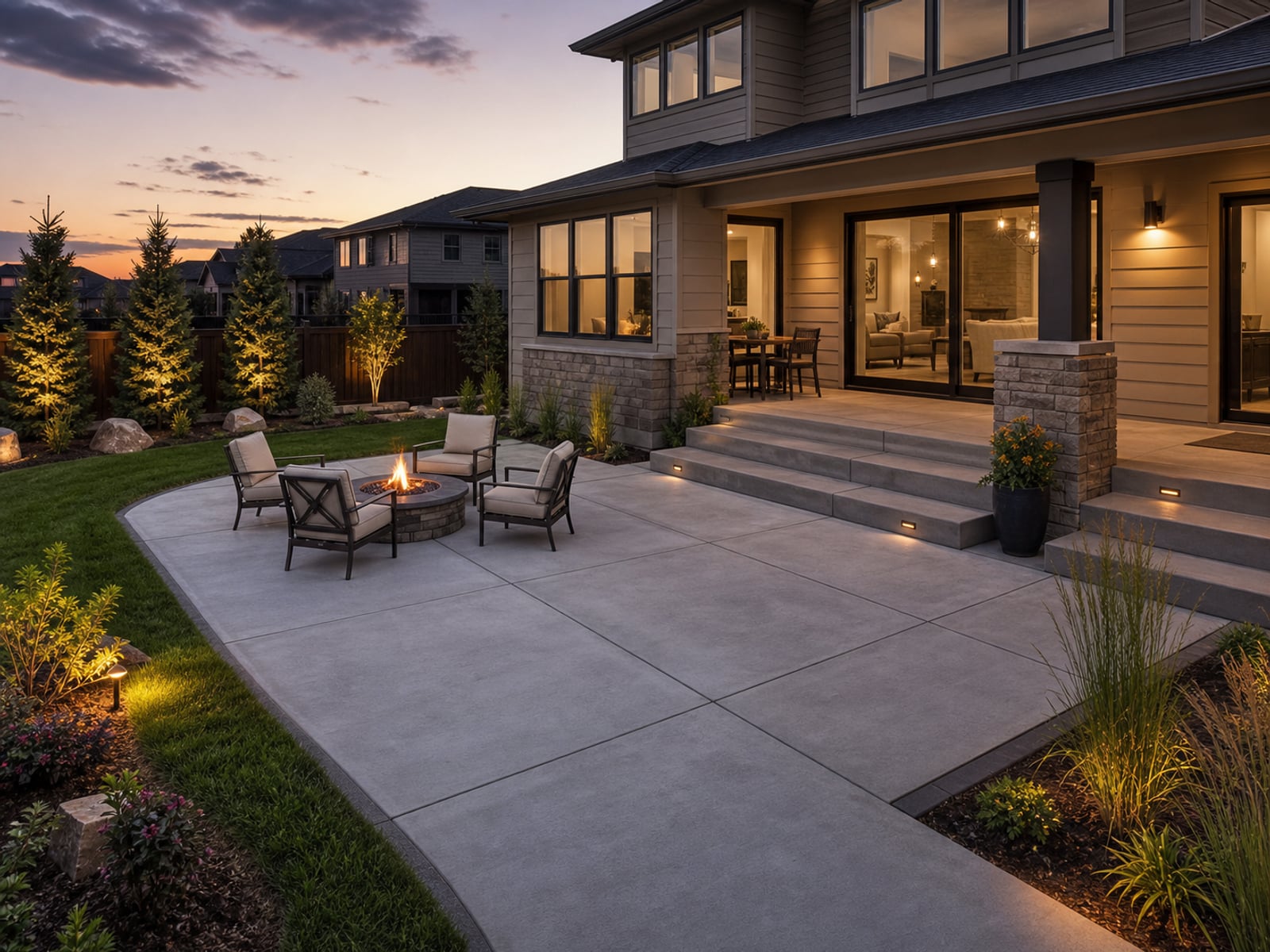
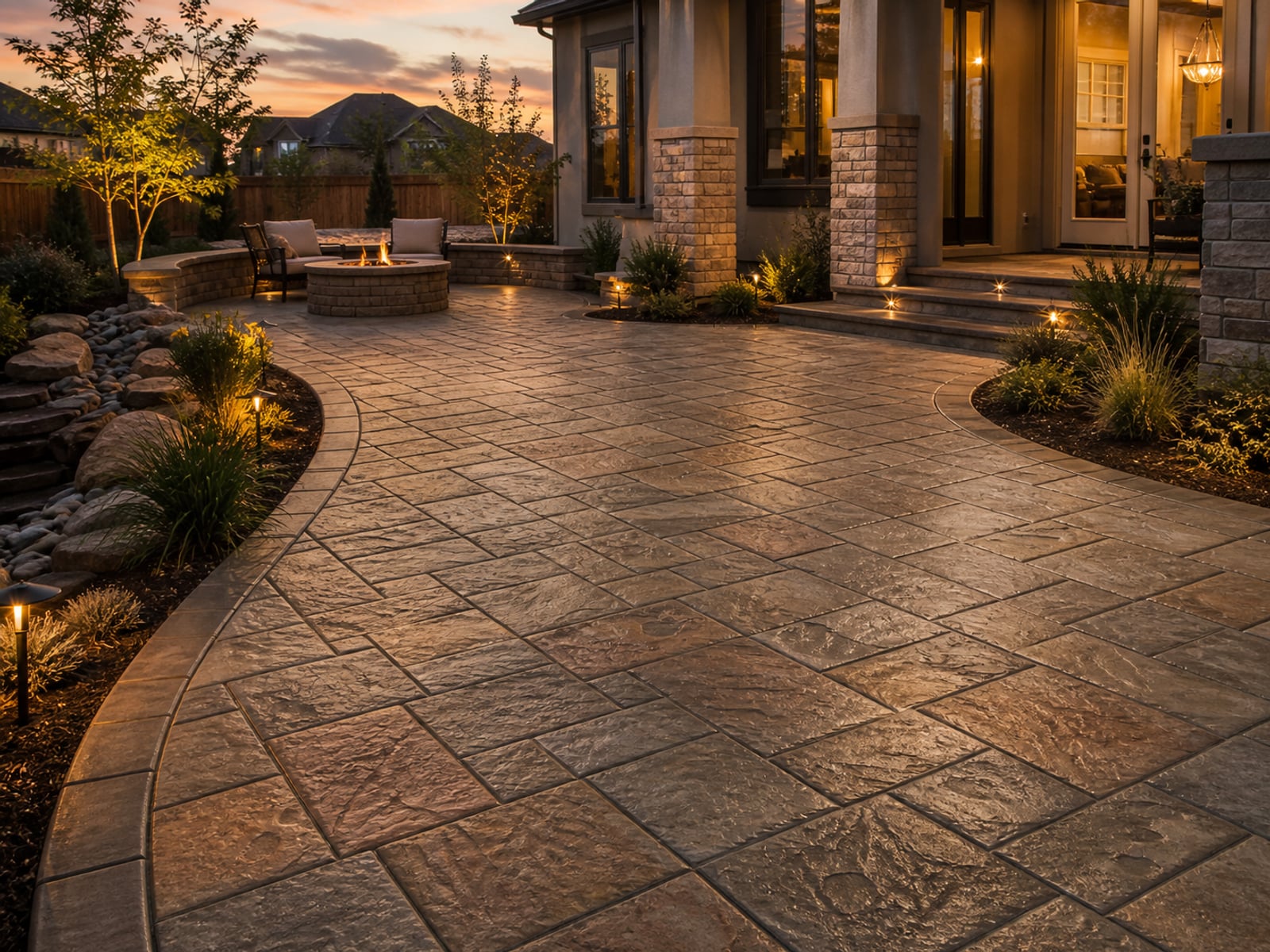
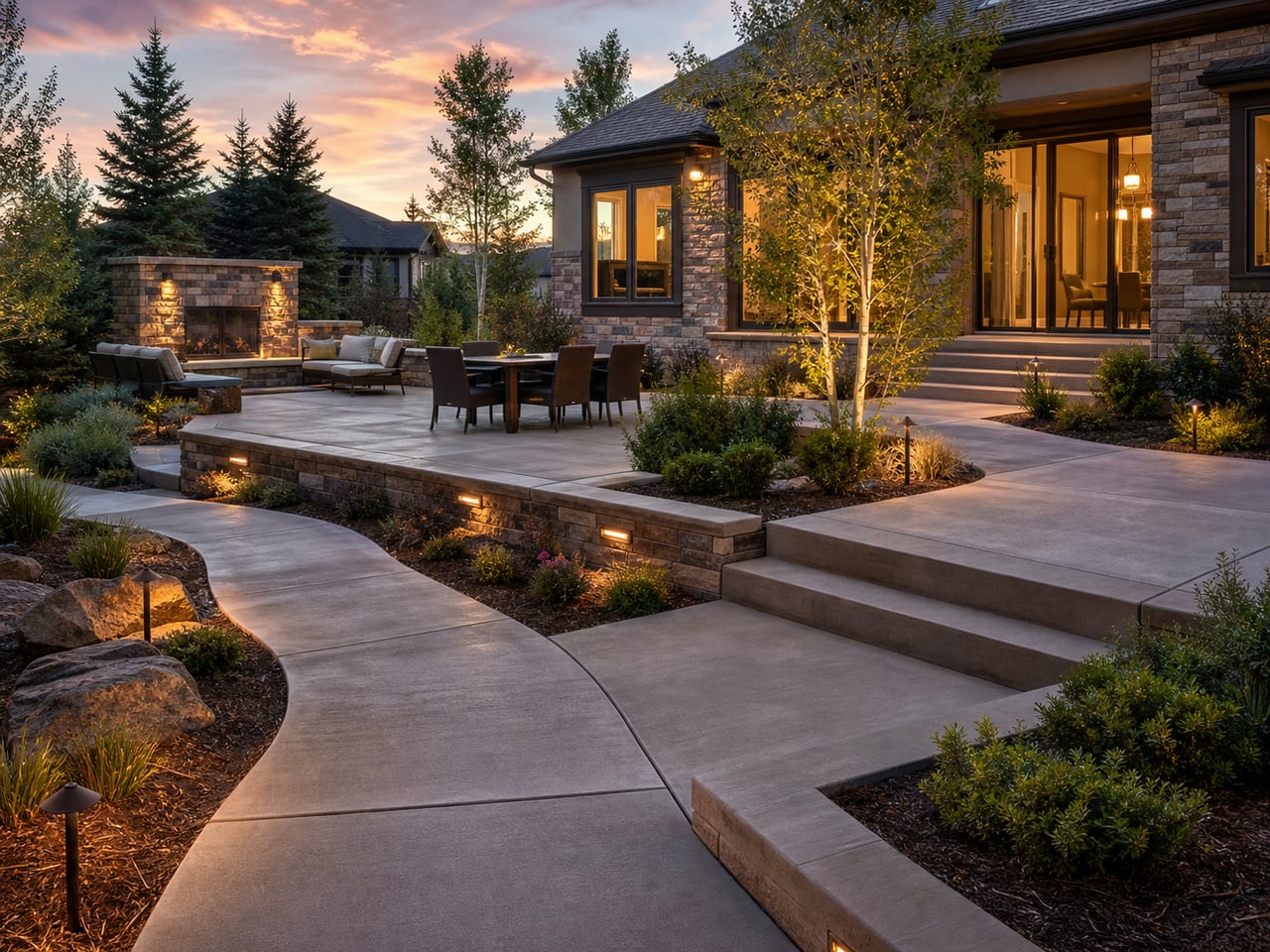
![Freshly placed concrete surfaces, steps, and a curved seat wall behind a [Your City] home at dusk](/assets/frames/frame_0110.webp)
A driveway fails from the bottom up. Soft base, skipped compaction, and afterthought joints show up as cracks within a few winters. [Your Concrete Company] builds the part you never see first, then pours the part you look at every day.
No two driveways price the same. These are the levers that move the number, before any dollar amount is attached.
Length, width, flares, and turnarounds set the concrete volume and the crew time.
Removing an existing slab, and how thick it proves to be, adds demo and disposal work.
Tight access, steep slope, or a long reach from the truck changes prep and pour logistics.
A standard broom finish is the baseline. Borders, color, and exposed aggregate add finishing steps.
Dollar figures come from the walkthrough, in writing. These are the levers that set them.
The scope you approve is the driveway that gets poured.
Thickness, tear-out, timing, and what moves the number: the answers homeowners compare contractors on.
Yes. The estimate reviews existing elevations, water flow, and transition points so the new driveway lines up cleanly with the garage slab, walkways, and street approach.
Most replacements include demo and haul-off of the existing slab. We confirm scope on the estimate so the line items are clear before the first day of work.
Standard residential driveways are typically poured at 4–5 inches with proper sub-base prep. Heavier vehicles or specific use cases can shift the spec. We review that during the walkthrough.
Concrete keeps gaining strength for about a month. Most new driveways take foot traffic within a day or two and vehicles after about a week. Your written scope includes the exact cure schedule for your pour and mix.
Square footage, tear-out and haul-off, access for trucks, the condition of the base under the old slab, and the finish level. The written estimate breaks each of those out as its own line item so nothing hides in a lump sum.
Send the address, rough dimensions, and a photo of the existing slab. The estimate comes back as a written scope, not a guess.